SpaceX reveals Anthropic pays them $15B/year. Gartner says the world spends $2.59T on AI. JPMorgan says it’s America’s only hope. The ceasefire is collapsing. Cerebras IPO’d — and crashed.
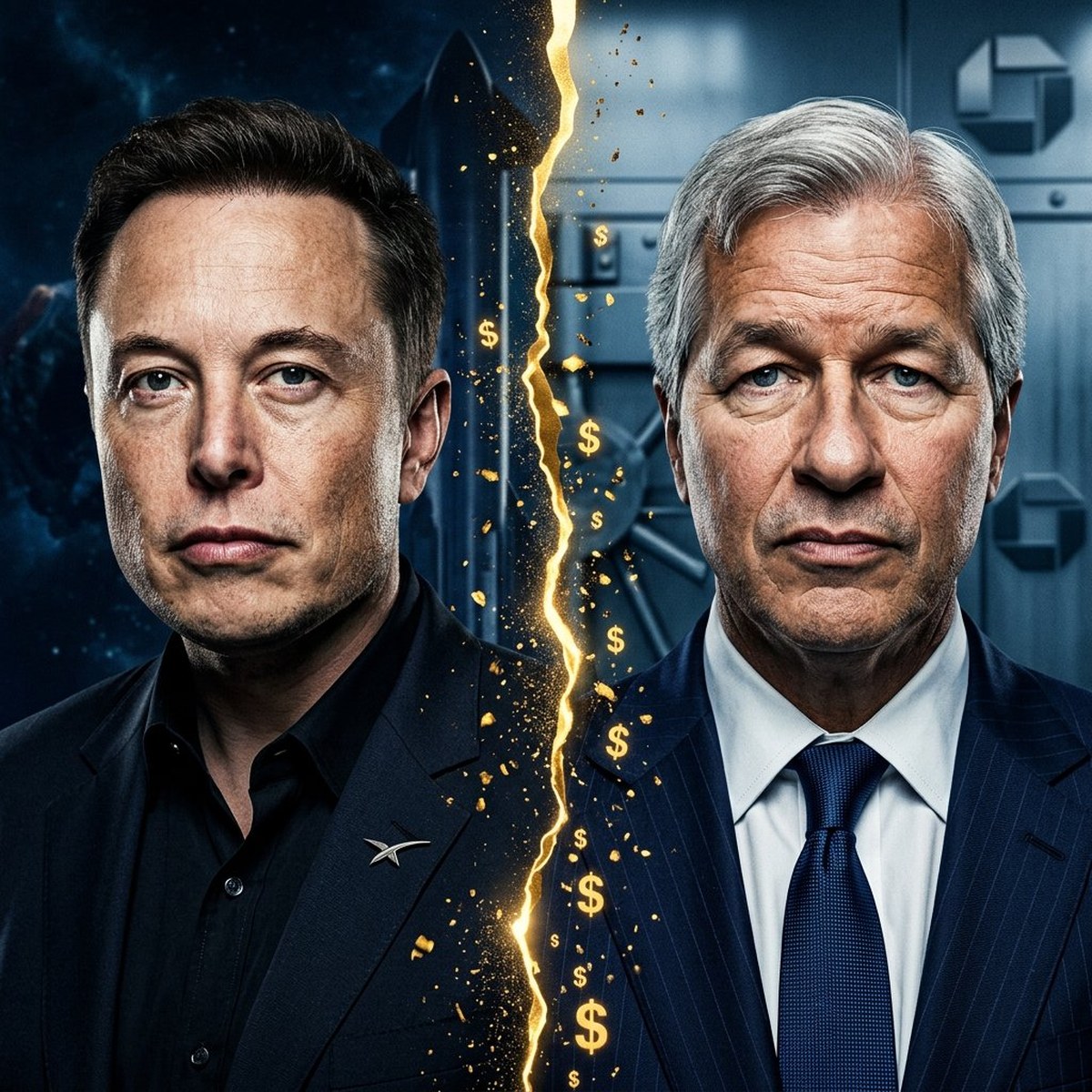
This week put a price tag on everything.
SpaceX priced its future at $1.75 trillion and revealed that Anthropic — the safety-first AI lab — is paying Elon Musk’s data centers $1.25 billion a month. Gartner priced global AI spending at $2.59 trillion for 2026. JPMorgan’s economists priced America’s way out of a $39 trillion debt crisis: AI productivity or bust. Cerebras priced a chip company at $350 a share, then watched it crash. And Iran priced peace at $96-a-barrel oil — with the ceasefire collapsing just as markets started to believe in it.
Every story this week was a number. Every number was bigger than anyone expected. And the question they all asked was the same: what happens when everyone bets on the same thing at the same time?
SpaceX filed its S-1 prospectus with the SEC this week, and the numbers are staggering.
Revenue grew 33% year-over-year. Starlink alone generated $11.4 billion with operating profit of $4.4 billion — the only segment printing green. But here’s the buried bombshell.
The company most aligned with AI safety is funding the company least aligned with anything. Anthropic’s $15B annual payment is larger than xAI’s entire reported revenue. The AI segment posted a $6.4 billion operating loss in 2025 — and Anthropic’s cash is the oxygen keeping it alive.
Also buried in the S-1: SpaceX plans to deploy orbital AI compute satellites by 2028 — data centers in sun-synchronous orbit running inference at scale, connected globally via Starlink. This isn’t science fiction. It’s in an SEC filing.
Roadshow starts June 5. IPO June 12. Ticker: SPCX on Nasdaq.
Gartner revised its global AI spending forecast upward — again. The world will spend $2.59 trillion on AI in 2026, up 47% from the prior year. That’s more than Italy’s entire GDP.
Agentic AI spending alone is up 141%, reaching $202 billion. By 2027, spending on AI agents will surpass chatbots and assistants entirely. The chatbot era didn’t just end — it got a price tag for its replacement.
Meanwhile, Fortune’s 2026 Most Powerful Women list is dominated by CFOs steering trillion-dollar AI infrastructure bets: Susan Li (Meta), Amy Hood (Microsoft), Anat Ashkenazi (Alphabet), Sarah Friar (OpenAI), Colette Kress (Nvidia). Microsoft alone is targeting $190 billion in 2026 capex — a 61% jump. These women are making the largest capital allocation decisions in corporate history.
JPMorgan’s economics team said the quiet part out loud this week.
The US debt trajectory only stabilizes if AI-driven productivity gains exceed even the most optimistic current projections. The Big Beautiful Bill adds $5.5 trillion to the deficit over a decade. Tariff revenue covers roughly half. The remaining gap requires GDP growth not seen since the post-war era.
JPMorgan called it a “moonshot.” That word choice matters. Moonshots are aspirational. They’re also the kind of thing you attempt when every other option has been exhausted.
Meanwhile, Jamie Dimon said the American Dream is “slipping away” and put $40 million on the table to fix it. Jeff Bezos said the bottom half of earners should pay zero income tax. The people closest to the money are the most worried about what happens next.
Cerebras — the company that builds chips the size of dinner plates — IPO’d this week. It was everything and nothing at once.
Priced at $185. Opened at $350. Surged 68% on day one. Then crashed. Hard. Cathie Wood’s ARK started buying the dip. The Motley Fool published four articles about it in 48 hours. It is currently the most volatile stock in the market.
What Cerebras tells us about SpaceX: if a chip company can swing 40% in a week, imagine what a $1.75 trillion rocket company will do on June 12. The IPO window is open — and the animals are running through it.
Fortune’s morning brief put it perfectly: “The ceasefire is looking a little more firing and a little less ceasing.”
Brent crude pushed back near $96. Bitcoin dropped to $73,335. S&P futures turned negative. Europe down 0.5%. Asia red across the board — even South Korea’s KOSPI fell. The 8-week winning streak that felt unstoppable may break this week.
Hormuz remains the invisible thread. Every week it stays contested is another week the Fed can’t cut. Every $10 on oil is another 0.3% on headline inflation. And every 0.3% on inflation is another meeting where Warsh sits on his hands.
Microsoft → Japan, $10B: Largest-ever commitment to the country. Four-year AI data center expansion with SoftBank and Sakura Internet. Maps to Prime Minister Takaichi’s “Sovereign AI” strategy. Training 1 million engineers by 2030.
Anduril weapons stumbling: WSJ reports Palmer Luckey’s autonomous weapons are failing in real tests and combat. The $61B defense-tech darling has a quality control problem. Silicon Valley speed vs. defense-grade reliability is a harder trade-off than the pitch deck suggested.
Google × Blackstone: Google partnered with Blackstone to provide AI computing capacity using its tensor processing units. When the world’s largest alternative asset manager teams up with the world’s largest AI compute provider, the infrastructure layer is where the real money flows.
Week 5 of 52: Read the S-1.
SpaceX’s S-1 is the most important document in tech right now. Not because of SpaceX — because of what it reveals about where AI money is actually flowing. The Anthropic deal. The orbital compute plan. The xAI losses. It’s all there.
This week’s action: Read one S-1 filing. SpaceX. Cerebras. Or OpenAI when it drops. You don’t need a finance degree — you need curiosity. Search “risk factors” and start there. The person who understands where capital is going gets there first. Everyone else reads the headline a quarter later.
Connect the dots. JPMorgan says America needs AI productivity to save it from $39 trillion in debt. Gartner says the world is spending $2.59 trillion to make that happen. Microsoft is putting $190 billion of capex behind it. SpaceX is literally planning to put AI data centers in orbit to scale it.
The entire US fiscal strategy now rests on AI delivering. That might be right. But the certainty with which everyone is pricing it in — $2.59T in spending, $190B in capex, $39T in debt math — leaves zero margin for “what if it takes longer.”
The bill came due this week. The answer was: bet on AI. That’s either visionary or the most expensive prayer in history.
Salesforce earnings (Tue Jun 3) — Agentforce adoption numbers: real revenue or keynote theater?
Marvell + Snowflake earnings (Wed Jun 4) — AI infrastructure reality check. Do the picks-and-shovels plays still have pricing power?
SpaceX roadshow begins (Thu Jun 5) — First live investor presentations. The book will build fast.
Apple WWDC keynote (Mon Jun 9) — Siri overhaul. On-device AI. The last Big Tech company to go all-in on agents.
Warsh’s first public remarks — Rate signals, language parsing, and the market holding its breath.
We’ll be watching all of it.
Join North American professionals who get The Ledger Wire every Wednesday — AI and finance intelligence in 5 minutes flat.
🎉 You're in! Briefing #13 lands next Wednesday.
🔒 Free forever. No spam. Unsubscribe anytime.